
Kungsleden in Winter: A School for the Far North
Abisko → Nikkaluokta
View datesCompare options ↗The Kungsleden, or King’s Trail, is one of Scandinavia’s most iconic hiking routes—and for good reason. The full trail stretches for around 425 km, but we’ll follow only its northernmost section: 110 km between Abisko and Nikkaluokta, widely considered its most beautiful and dramatic stretch, much of it above the tree line.
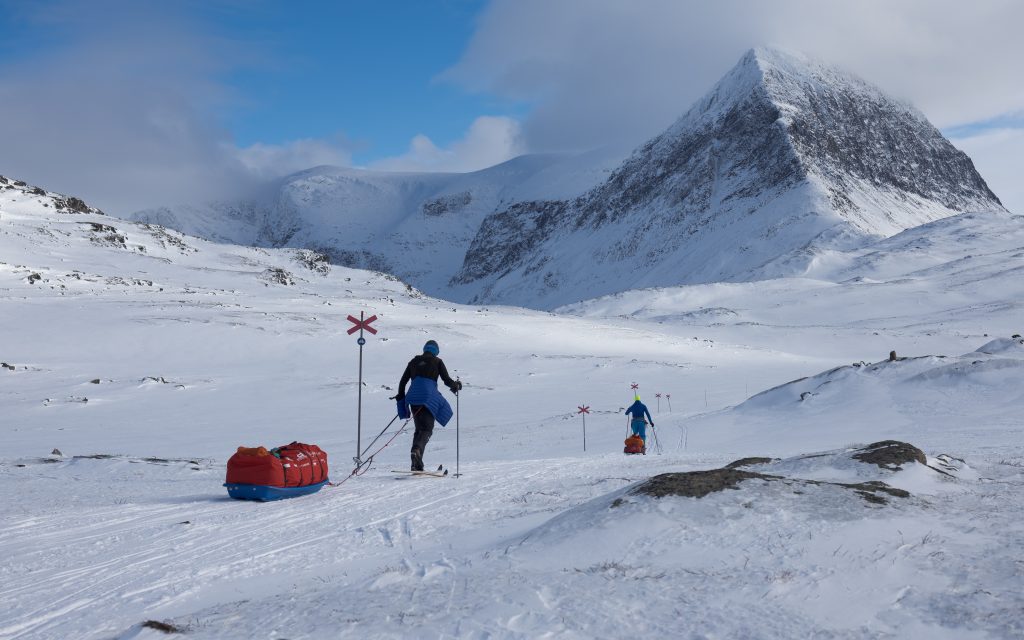
In winter, this crossing offers a wonderful taste of what a polar expedition can be—cold, remote landscapes, skis, pulks and self-reliance—while retaining the reassuring landmarks of a marked trail and regular mountain huts.
The region is also one of the world’s best places to see the Northern Lights. Ideally located beneath the auroral oval, around 200 km north of the Arctic Circle, it often enjoys exceptional conditions. The Scandinavian Mountains hold back some of the clouds coming from the west, making Abisko and its surroundings known for their clear skies.
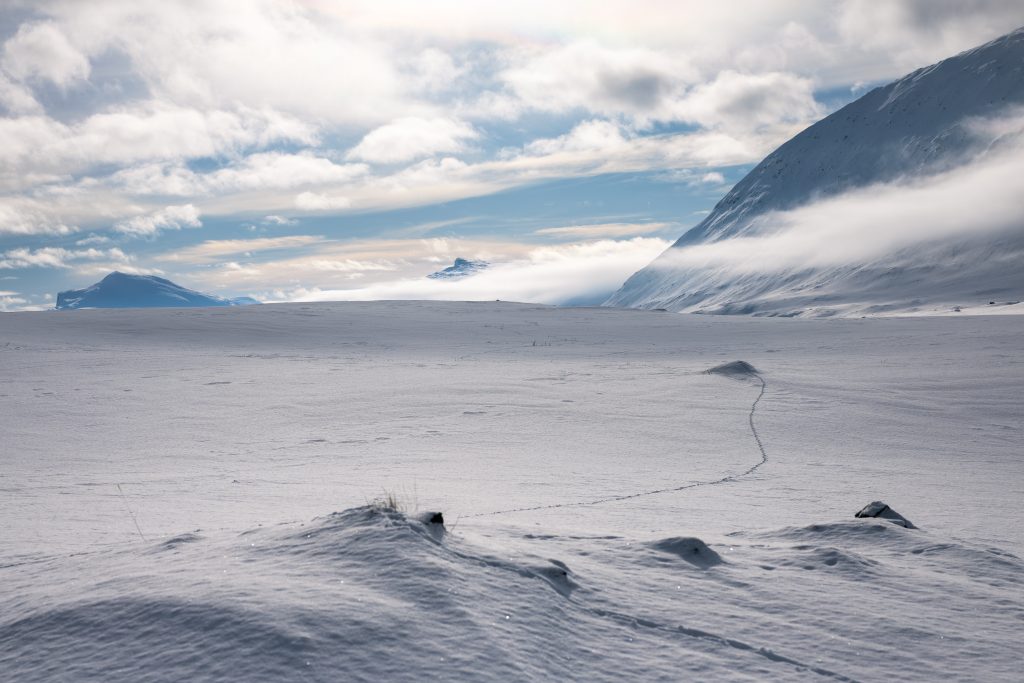
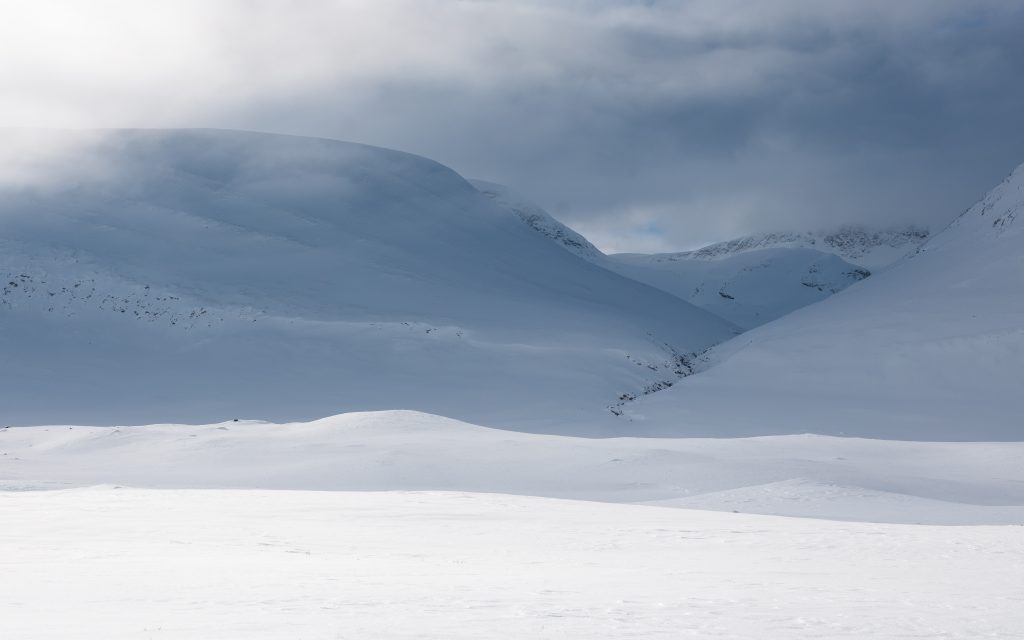
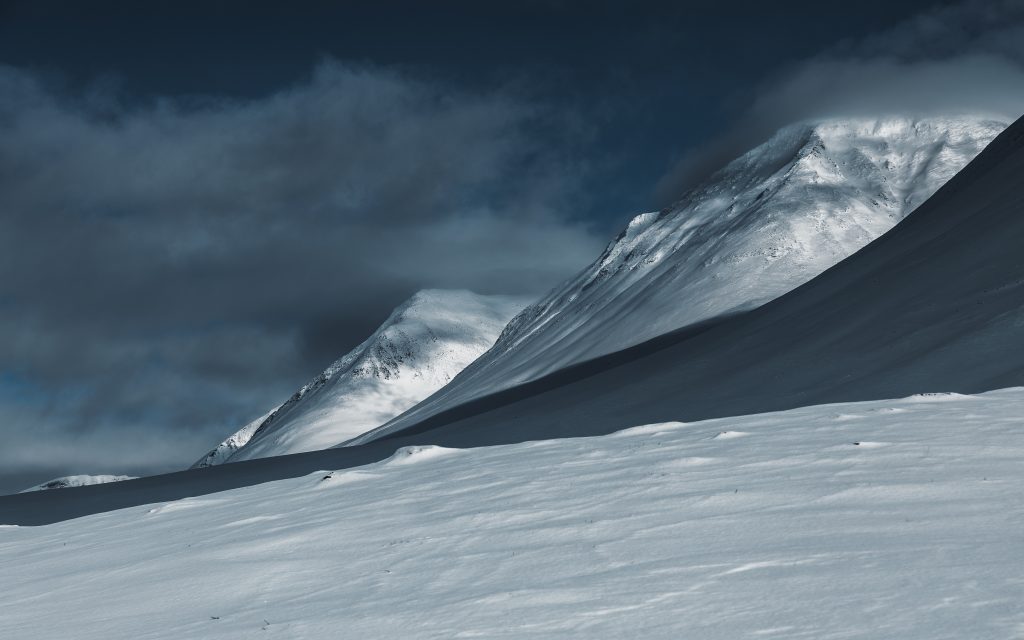
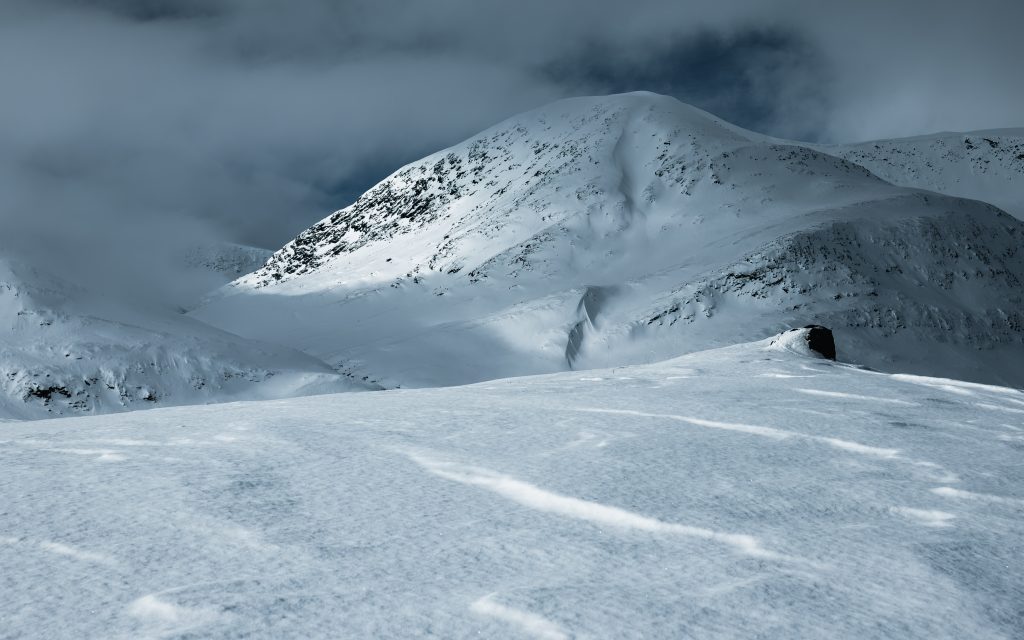
From Abisko, we’ll leave civilisation behind and travel by ski and pulk to the Sámi village of Nikkaluokta. We’ll spend nine days in the field, including seven days actually skiing. Our route passes beneath Kebnekaise, Sweden’s highest peak, through a remarkable variety of landscapes: boreal forests, seemingly endless frozen lakes, glacial valleys, dramatic mountain passes and vast white expanses, beneath skies that can glow with unreal colours.
The beauty of these places is hard to describe. I like to think that a little of their magic still lingers.
Each day, we’ll travel on skis, carrying our own food and equipment. Depending on the option you choose, we’ll spend the nights in mountain huts or tents. You don’t need to know how to ski to take part!
Don’t worry if you don’t have all the gear: some equipment can be rented, including skis, poles, boots, extreme-cold suits, expedition sleeping bags and mittens. Some of this equipment is already included in the price!
Throughout the trip, I’ll share what I know about the polar regions, the history of exploration, Scandinavian and Sámi culture, wildlife, language and the lands we cross. We may be lucky enough to spot moose, reindeer, ptarmigan, Arctic hares, foxes or even northern hawk-owls…
This is an upbeat adventure where everyone helps and encourages one another, and takes time to appreciate the wonders around us.
A photography option is available. I’ll help you develop your skills, compose your images and photograph the Northern Lights and winter landscapes, while taking care of your equipment in the cold.
Day-by-day itinerary
Over nine days, seven of them on skis with pulkas, we cross Swedish Lapland from Abisko to Nikkaluokta. We start among the birches, then come the frozen lakes, wide white valleys and the Tjäktja Pass. In the evenings, depending on the option you choose, we settle into a warm mountain hut or make camp in the snow. If the sky is clear, we keep an eye outside. The northern lights can start as a thread of light you mistake for a cloud before spreading across the whole valley.
Day 1
Meeting in Abisko
I’ll meet you in Abisko. We’ll get to know each other, try on our skis and boots and start packing the pulkas. We’ll also go for a walk nearby for a first look at the landscape we’re about to cross, with its birch woods, mountains and the vast Lake Torneträsk. That evening, we’ll unfold the map over dinner. The following day, we set off on skis.
Day 2
First tracks to Abiskojaure
We enter Abisko National Park through birch woods, following the Abiskojåkka valley. Bit by bit, you’ll find your balance and get used to the pulka trailing behind you. In the woods, we’ll stop to look at tracks in the snow. With a bit of luck, you might spot a moose between the trees. The forest thins as we approach Abiskojaure, where we’ll spend our first evening on the trail.
Day 3
Beyond the last birches
We leave Abiskojaure for Alesjaure. As we climb, the trees thin out, and suddenly you can see a great deal farther. Frozen lakes and mountains fill the view. It’s the longest day of the crossing, so we’ll take the time to find a pace that suits everyone. At Alesjaure, if the sky clears after dinner, we’ll go out again to see what’s happening above the lake.
Day 4
Climbing towards Tjäktja
From Alesjaure, we follow the valley up towards Tjäktja. The mountains close in and the slope gets a little steeper towards the end. We’re already a long way from the woods where we started. A ptarmigan sitting still can be remarkably hard to spot in the snow. Sometimes you only notice it when it takes flight. Today’s shorter stage gives us time to rest before the pass.
Day 5
Over the Tjäktja Pass and down to Sälka
We cross the Tjäktja Pass, the highest point on the Kungsleden. If the sky is clear, the Tjäktjavagge valley opens up all at once in front of us. It’s the sort of place where I like to stop for a moment before moving on. Then comes the descent to Sälka. After several days pulling a pulka, we find out what happens when it’s the one that wants to go faster than we do.
Day 6
Through the wide valley from Sälka to Singi
The valley widens and we ski beneath steep mountain slopes. Sometimes a break in the clouds is enough to bring out a summit we could barely see a few minutes earlier. We might spot reindeer in the distance. By now, the routines of travelling on skis feel familiar. Packing the pulka goes faster, finding our pace comes more easily, and everyone has their evening habits. By this point, conversation in the hut usually turns to a very serious question: what cheese are you going to eat when you get home?
Day 7
At the foot of Kebnekaise
At Singi, we leave the Kungsleden and head towards Kebnekaise. The valley narrows between steep slopes. If the summits are clear, we’ll see Tuolpagorni before reaching the mountain station. It’s one of my favourite stages to point out on the map, because the mountains feel so much bigger when you’re standing beneath them.
Day 8
The last stretch to Nikkaluokta
We follow the valley towards Nikkaluokta. After several days skiing through wide white landscapes, the birches gradually return. There’s still a full day on skis before the first houses come into view. That’s where we unclip the pulkas for the last time. At the start, every little movement took thought. By the end, it almost feels strange to walk without anything behind you.
Day 9
Back to Kiruna
We get on the bus in Nikkaluokta, our legs a little heavy and our minds still in the mountains. As we watch them recede through the window, we talk about what amazed us, what we learned… or simply what made us laugh. After a week of moving at the pace of our skis, you almost wish the scenery wouldn’t go by quite so fast! We say goodbye in Kiruna, and there’s a good chance we’ll want to come back to the Far North one day.
Dates & departures
Private group departures can be arranged on request. We’ll choose dates together based on your availability, local conditions and accommodation options.
Meilleure période
Fin janvier à fin mars
Pour profiter au mieux des aurores, de la luminosité et de l’enneigement.
Tents or mountain huts?
2190€
Experience winter camping in conditions close to those of a polar expedition!
2190€
Experience winter travel while enjoying the mountain huts of the Far North
Swedish Lapland
Beyond the Arctic Circle, in the heart of the Sápmi mountains, the Kungsleden winds through birch forests, glacial valleys and spectacular mountain passes, all the way to Nikkaluokta via Sweden’s highest peak, Kebnekaise.
Fitness level: 3/5
A good level of fitness is required, and you should be ready to step outside your comfort zone.
You don’t need to be an athlete, but regular physical activity is recommended.
Season
January to the end of March, for daylight, good snow conditions and the Northern Lights!
The experience
Experience the spirit of a polar expedition and discover what these lands have to offer.
Conditions
Temperatures from 0°C to -40°C.
Arctic weather can be changeable—and sometimes sublime.
Photos
A few photos from previous trips.
For photographers looking to improve, a photography option is available. I’ll do my best to help you choose your shots, look after your equipment and capture unforgettable images.
Testimonials
Une superbe expérience humaine et sportive, au cœur de la nature polaire. Des paysages grandioses, des soirées en refuge et surtout un retour à l’essentiel.
Du rire, des moments intenses, des efforts partagés et au final des souvenirs plein la tête.
Merci Moufid pour cette magnifique aventure !
Superbe apprentissage de la conduite de la pulka en milieu polaire ! Sans compter d’autres apprentissages essentiels : faire le feu en arrivant au refuge, skier sur des lacs gelés, découvrir et reconnaître la faune polaire…
Et surtout, apprendre à s’entraider, à compter les uns sur les autres et à prendre le temps d’admirer une nature grandiose grâce à un guide génial !
Immense merci Moufid pour ces deux magnifiques séjours en Laponie ! Au-delà des paysages incroyables, et du challenge sportif, c’est surtout la qualité de l’accompagnement ainsi que tous ces échanges et ces fous rires qui ont rendu cette expérience inoubliable.
Moufid est un guide passionné, profondément humain, d’une bienveillance rare et toujours aux petits soins pour chacun. Son amour du monde polaire est communicatif et nous donne envie de mieux comprendre et protéger cet environnement exceptionnel.
L’organisation est irréprochable, Moufid est présent avant, pendant et même après le voyage, notamment en partageant de superbes photos qu’il prend tout au long du séjour.
Un rêve éveillé.
Frequently asked questions
Feel free to get in touch if you have any questions!